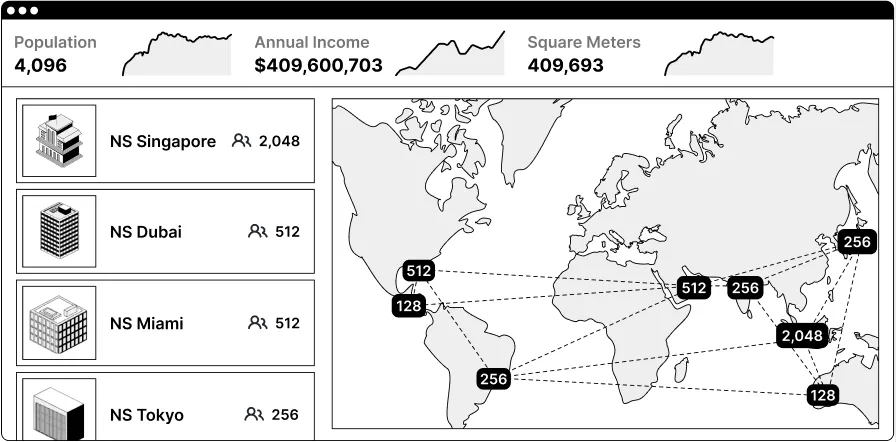
“A network state is a highly aligned online community with a capacity for collective action that crowdfunds territory around the world and eventually gains diplomatic recognition from pre-existing states.”
Balaji’s vision: internet communities become real societies, organized around shared values, digital coordination, and crypto governance rather than legacy borders. Physical nodes are the next frontier.
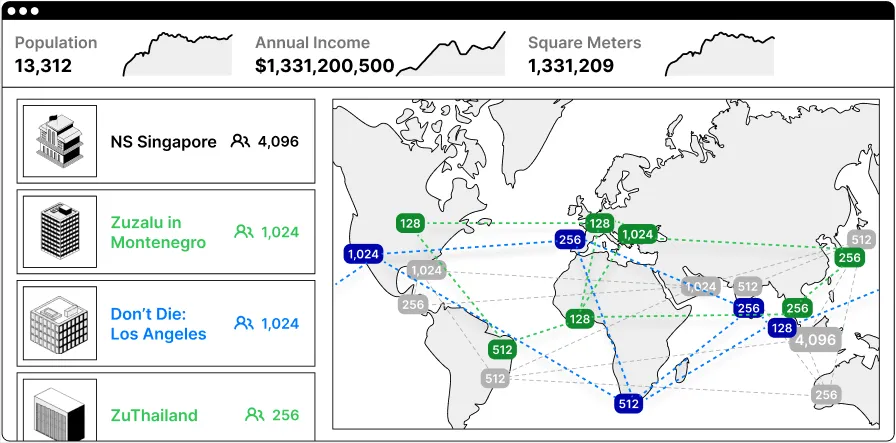
The next generation of founders, engineers, researchers, and creators will live and build differently.
Modern communities need more than a place to stay. They need coordination, memory, connection, and intelligence across the physical and digital world.
IronHeart.AI helps network-native communities scale operations, onboard residents, preserve knowledge, and connect people across nodes.
Online communities are becoming physical: campuses, residencies, pop-up cities, startup societies, and global nodes.
The hard problem is coordination. Knowledge disappears. Context is scattered. New nodes start from zero. Important connections happen by accident.
IronHeart.AI gives these communities an operating layer for memory, onboarding, member routing, rituals, and cross-node continuity.
People gather, but context is not preserved. Knowledge lives in chats. Introductions depend on memory. Every node rebuilds the same operating system by hand.
High-agency builders want more than a place to stay. They want proximity, acceleration, intelligence density, and an environment that compounds ambition.
Today, that coordination layer barely exists.
IronHeart connects people, rituals, knowledge, onboarding, events, and node operations into one coordination system.
Not a vendor tool. Infrastructure for ambitious communities building the future.
When NS launches a Malaysia node, Dubai node, Tokyo node, or Lisbon node, each location should not have to relearn the same lessons from zero.
IronHeart.AI turns each location into a learning node. The operating knowledge of one campus becomes reusable intelligence for the next.
Records operational flows, conversations, workshops, onboarding patterns, logistics, founder insights, and mentor interactions, then converts them into searchable intelligence.
Learns tone, rituals, communication style, educational structure, social patterns, and community behavior to carry the feeling of the original Network School.
A new participant does not read a PDF. They talk to AI mentors, onboarding layers, cultural guides, and historical memory.
Community memory should not die when people leave. IronHeart.AI creates persistent operational memory and cross-location learning.
Coordinates events, routes opportunities, connects members, suggests collaborations, manages communication, and detects high-value contributors.
Not “AI agents for business.” For a systems thinker, civilization designer, and protocol architect, the stronger frame is infrastructure that lets a startup society remember, replicate, and coordinate itself across locations.
IronHeart.AI combines shared memory, voice runtime, agent roles, and real-world coordination into one infrastructure layer for network-native communities.
For Network School-style ecosystems, this becomes especially powerful: communities can scale coordination, preserve context, increase intelligence density, accelerate collaboration, and turn each node into a reusable operating system.
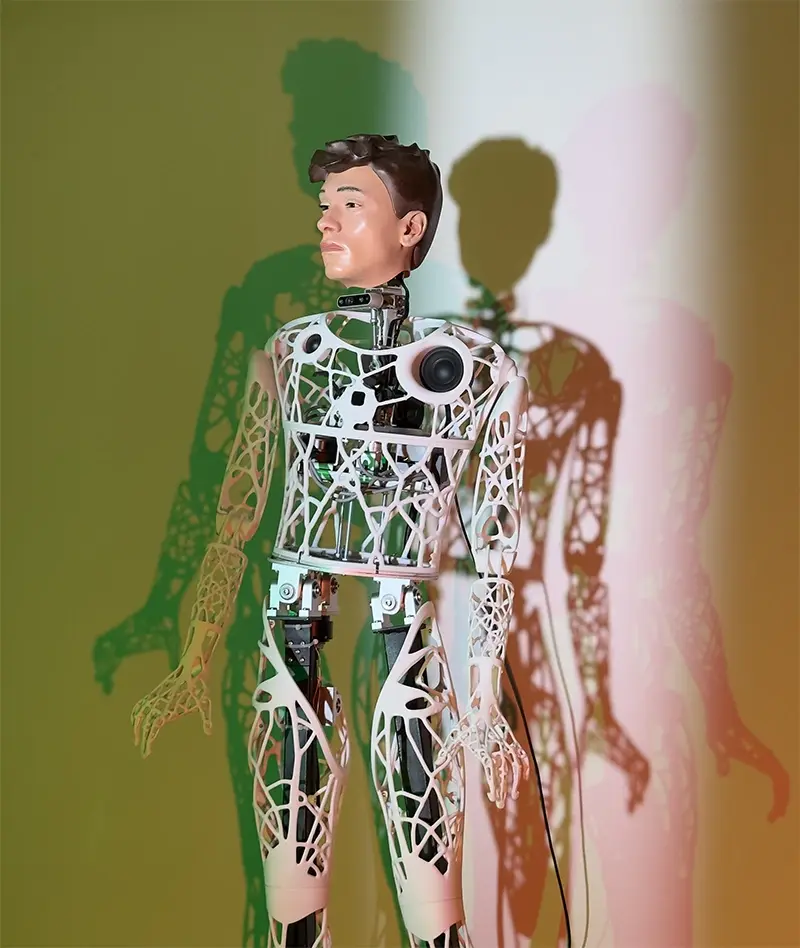
IronHeart.AI began by trying to solve real interaction between AI and humans in the physical world. A robot cannot depend on a static dashboard or a single prompt. It needs systems that remember, listen, route, speak, and keep context alive across every moment of operation.
The robot became the reason the infrastructure existed.
Now that infrastructure can live without the robot, inside communities, campuses, residencies, founders, creators, and enterprise coordination systems.
A glimpse of the original problem: AI conversation leaving the screen and entering the physical world.
After the robot, the question became obvious: if AI can leave the screen and interact with people, it can also carry the useful parts of a human operator. Voice, knowledge, memory, judgment, tone, and workflows become callable interfaces, similar to the category opened by Callable*.
Physical AI required memory, voice, routing, persistent context, and coordination across messy real-world situations.
A person’s expertise can become a voice-first AI layer that others can call, question, and learn from at any time.
Once roles can be cloned, the real product becomes orchestration: many specialized agents sharing memory and operating together.
That is why IronHeart.AI is moving from a single intelligent body to an orchestra of deployable AI roles.
The live demo is mapped to the Marco character. Visitors can type to the coordination layer or start a live voice call with the same agent runtime behind IronHeart.AI.
One conversation to map the first agent layer: onboarding, member routing, memory, and operational orchestration across nodes.
Your integration request was submitted successfully. The IronHeart.AI team will review it and get back to you.